Haikou felt unusually alive in early December, not in a tourist-season way, but with the hum of deal-making, logistics talk, and that very specific mix of soil, machinery, and ambition that only a serious agricultural fair produces. From December 4 to 7, the 28th China (Hainan) International Winter Trade Fair for Tropical Agricultural Products brought together more than 2,000 enterprises and over 10,000 professional buyers, ultimately drawing close to 200,000 visits. It wasn’t just big by numbers; it felt dense, layered, almost crowded with intent, as if every booth carried a quiet calculation about where tropical agriculture is heading next.
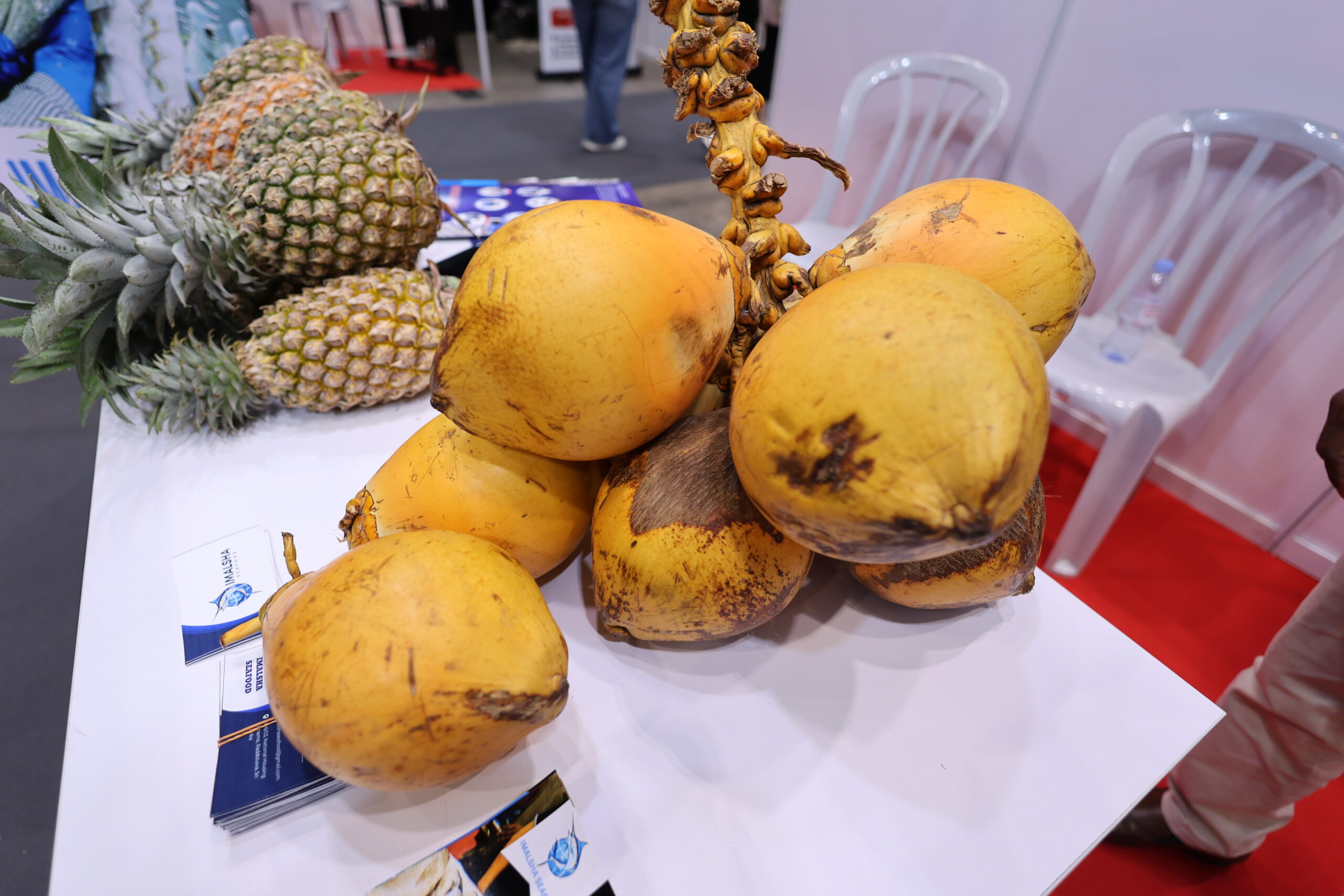
Shot with Canon R100 and a TTArtisan 50mm f/1.2
Walking through the exhibition halls meant moving from aquaculture systems to livestock genetics, from new fruit cultivars to smart irrigation and processing equipment, all stitched together by the idea that agriculture here is no longer just about land and climate, but about integration. Technology, branding, logistics, and policy were constantly bumping into each other. One moment you’d see advanced monitoring systems for fish farming, the next you’d be looking at packaging designed for cross-border e-commerce. The fair made a point, subtly but firmly, that modern agriculture in Hainan is not a back-end industry anymore; it’s front-facing, export-ready, and increasingly global.
A crowd magnet emerged almost instantly: a live yellowfin tuna cutting demonstration. It sounds theatrical, and honestly, it was, but not in a superficial way. Buyers and visitors gathered not only to watch and taste, but to understand how such a premium product could exist within a controlled, scalable aquaculture model. Bringing tuna onto the exhibition floor was less about spectacle and more about signaling a complete chain, from smart breeding to cooperative farming structures built around the “company + base + farmer” model that Hainan has been refining. The South China Sea, a natural migratory zone for yellowfin tuna, plays a crucial role here, and Lingshui Li Autonomous County has quietly become a proving ground for sustainable offshore aquaculture. The South China Sea Fisheries Research Institute under CAFS established the country’s first offshore demonstration base for yellowfin tuna farming in the area, and after years of experimentation, breakthroughs in artificial spawning and market cultivation are no longer theoretical. The local agricultural investment group in Lingshui alone has successfully farmed over a thousand tuna, which is not a small symbolic milestone; it’s a commercial one.
That tuna story actually mirrors a larger pattern visible across the fair. From breeding and cultivation to processing and cold-chain logistics, entire agricultural ecosystems are being built rather than isolated products. This is where Hainan’s broader strategy becomes obvious. Leveraging its tropical climate and the policy framework of the Hainan Free Trade Port, the province is pushing hard on branding, most notably through the public label “Hainan Fresh Products.” The ambition is expansive: elevate winter melons and vegetables, Wenchang chicken, tilapia, and other local staples into recognizable, trusted products that can move confidently into global households. It’s agriculture framed as identity, not just output.
The international dimension added another layer. Thailand and Pakistan served as dual guest countries of honor, while exhibitors from 16 countries and regions filled the halls with their own agricultural signatures. Conversations at booths often drifted from product descriptions to supply-chain partnerships and long-term collaboration. Stephen Kise, an exhibitor from Uganda, spoke openly about the response to his coffee and soapstone crafts, noting the interest in full-chain cooperation rather than one-off transactions. From Vietnam, VINAPIA Food Joint Stock Company arrived with durian, coffee, and bird’s nest products already primed for the Chinese market. Sales manager Huang Yundong described China not as an experimental destination but as a strategic focus, and the multiple distribution inquiries they received seemed to confirm that calculation.
Buyers came in force, and not just locally. Major Chinese wholesalers, retailers, and e-commerce platforms like JD.com and Douyin were present alongside international procurement groups from Thailand, Bulgaria, Pakistan, Canada, and Singapore. Many didn’t limit themselves to the exhibition halls; field visits to production bases became part of the routine. The logic is clear enough: Hainan Free Trade Port policies, including zero tariffs, low tax rates, and a simplified tax system, offer practical advantages for anyone looking to move goods efficiently in and out of China. The phrase “buy global, sell global” appeared often in conversations, sometimes sounding like a slogan, sometimes like a very concrete business plan scribbled into a notebook.
According to the Hainan Provincial Department of Agriculture and Rural Affairs, this fair carries additional weight as the final large-scale agricultural expo before the island-wide special customs operations of the Hainan Free Trade Port come fully into effect. Attention was intense, and the results reflected that. On-site sales exceeded 595.98 million yuan, orders topped 1.546 billion yuan, and 36 cooperation projects were signed with a total value surpassing 5.167 billion yuan. Numbers aside, what lingered most was the sense that Hainan is positioning agriculture not as a traditional sector catching up, but as a modern, branded, globally connected industry that knows exactly where it wants to go, even if it’s still adjusting the route along the way.